Money & Calculations
UK VAT Registration Threshold £90,000: When to Register and What It Does to Your Prices
Register for VAT if taxable turnover goes over £90,000 in 12 months. See the deadlines, and what 20% VAT does to a £100 price: £120.00 or £83.33.

Written by Ahad NoorPublished 5 min read
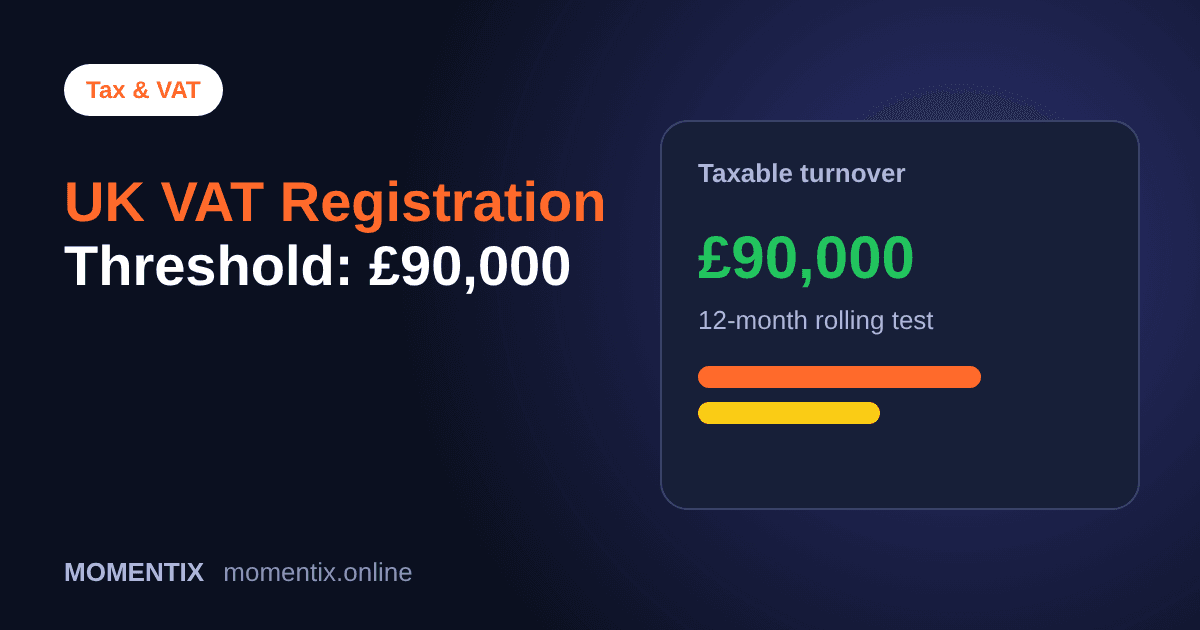
If you sell goods or services in the UK, there is a point where VAT stops being optional. GOV.UK sets it at £90,000 of taxable turnover. Cross it, and you have to register, charge VAT on what you sell and pass it to HMRC.
This guide explains the two tests, the deadline for registering, and what VAT does to a price in practice. If you charge £100 and add 20% VAT, the customer pays £120.00; if you keep the price at £100 including VAT, you keep only £83.33. You can run either direction with the VAT calculator.
Contents
What are the two VAT registration tests?#
GOV.UK describes two separate tests, and either one means you must register.
- Past 12 months: your total taxable turnover for the last 12 months goes over £90,000. You must register within 30 days of the end of the month you went over. Your registration is effective from the first day of the second month after you went over.
- Next 30 days: you expect your taxable turnover to go over £90,000 within the next 30 days. You must apply by the end of that 30-day period, and the effective date is the date you realised.
The 12-month test is a rolling window. It looks at the last 12 months at the end of every month, not only the tax year. Taxable turnover means the value of things you sell that are not exempt from VAT, so check what counts for your business.
Worked example: when a £7,500 a month business crosses the line
Assumptions: Taxable turnover is steady at the same amount every month, and the 12-month total is checked at the end of each month.
- At £7,500 a month, 12 months is exactly £90,000, which is not over the threshold.
- At £7,501 a month, 12 months is £90,012, which goes over.
- If the total goes over at the end of March 2027, you must register by 30 April 2027, and your registration takes effect from 1 May 2027.
The wording is 'goes over £90,000', so reaching it exactly does not trigger registration.
What does 20% VAT do to your prices?#
Once registered you charge VAT on taxable sales, at the standard rate of 20% for most goods and services. You have two choices on pricing: add VAT on top, or keep the customer's price and take VAT out of it.
| Net price | VAT at 20% | Customer pays |
|---|---|---|
| £50 | £10.00 | £60.00 |
| £100 | £20.00 | £120.00 |
| £250 | £50.00 | £300.00 |
| £500 | £100.00 | £600.00 |
| £1,000 | £200.00 | £1,200.00 |
| Price including VAT | VAT inside the price | You keep |
|---|---|---|
| £60 | £10.00 | £50.00 |
| £120 | £20.00 | £100.00 |
| £300 | £50.00 | £250.00 |
| £600 | £100.00 | £500.00 |
| £1,200 | £200.00 | £1,000.00 |
VAT formulas at 20%
Add VAT: gross = net × 1.2
Remove VAT: net = gross ÷ 1.2
VAT inside a gross price = gross − gross ÷ 1.2
A common mistake is taking 20% off a gross price. £120 minus 20% is £96, not £100.
If you absorb the VAT instead of adding it, your income on a £100 sale falls by £16.67, which is about 16.7%. For many customers, particularly consumers who cannot reclaim VAT, the sensible choice is to compare the price you need with the price they will accept.
What should you check as you approach £90,000?#
Track your taxable turnover over a rolling 12 months and decide how you will price before you reach £90,000.
Quick checklist
- Track your taxable turnover monthly, using a rolling 12-month total.
- Set a reminder when the total reaches about 80% of the threshold.
- Decide how you will price: add VAT or absorb it.
- Check the effective date so you charge VAT from the right day.
- Read the GOV.UK pages for the current rules before you rely on any date here.
Mistake: Using the tax year to track turnover.
Instead: The test uses any rolling 12 months, so check at the end of every month.
Mistake: Waiting until you have gone over to plan.
Instead: The forward-looking test can apply if you expect a very large month, so plan ahead.
Mistake: Taking 20% off a price to remove VAT.
Instead: Divide by 1.2 instead: £120 becomes £100, not £96.
Try the tool
VAT Calculator
Add 20% VAT to a net price, or take VAT out of a gross price, and see the net, VAT and gross amounts.
Open the VAT CalculatorRelated guides: UK take-home pay explained for 2026/27, how to remove VAT from a price, setting a freelance day rate.
Frequently asked questions#
£90,000 of taxable turnover, according to GOV.UK. You must register if your turnover for the last 12 months goes over that figure, or if you expect it to within the next 30 days.
You must register within 30 days of the end of the month you went over, and your registration is effective from the first day of the second month after. The separate 30-day test has its own deadline.
Yes. GOV.UK says you can register even if your turnover is below £90,000.
Multiply the net price by 1.2. For example £100 becomes £120.00, of which £20.00 is VAT.
Divide the gross price by 1.2. For example £120 becomes £100.00, and the VAT in it is £20.00.
Sources
- GOV.UK – VAT registration: when to register (checked 9 November 2026)
Ahad Noor
Ahad Noor builds and maintains Momentix, including its calculators, converters and the guides on this blog.
Each guide is checked against the matching Momentix tool, so the worked examples show the same figures the tool gives for the same inputs.