Money & Calculations
How Much of a Pay Rise Do You Keep in the UK? 2026/27 Examples at £35,000 and £55,000
A 5% rise on £35,000 is £1,750.00 gross but £1,260.00 take-home (72p per £1). Above £50,270 you keep 58p. Worked 2026/27 examples, free calculator.

Written by Ahad NoorPublished 5 min read
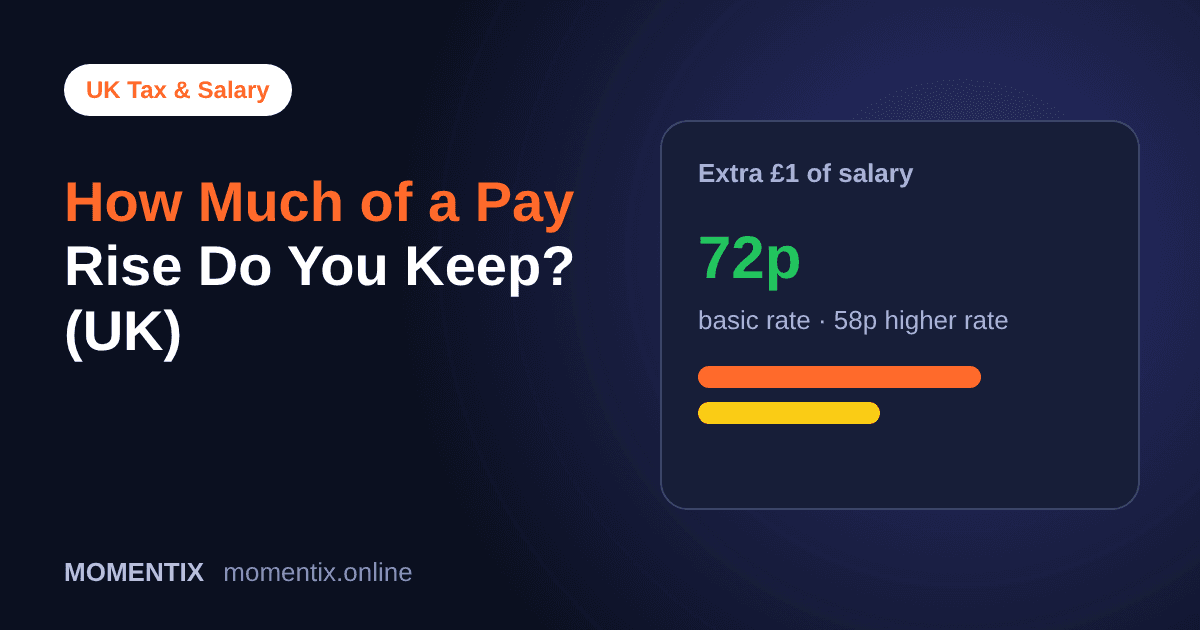
A pay rise is always bigger on paper than in your account. In 2026/27, a basic-rate taxpayer in England loses 20% of an extra pound to Income Tax and 8% to National Insurance, so a £1,750 rise (5% on £35,000) adds £1,260.00 a year to take-home pay, not £1,750.
This guide works through four examples, shows why the share you keep falls above £50,270, and explains the effect of a student loan. All figures come from the same formulas as the UK take-home pay calculator. The income tax bands used here are the GOV.UK 2026/27 bands for England, Wales and Northern Ireland.
Contents
Why do you keep less than the rise?#
Three things take a share of each extra pound: Income Tax, National Insurance and, if you have one, student loan repayments. The share depends on which band the extra pay falls in.
| Where the extra pay falls | Income Tax | National Insurance | You keep |
|---|---|---|---|
| Up to £12,570 | 0% | 0% | 100p |
| £12,570 to £50,270 | 20% | 8% | 72p |
| £50,270 to £100,000 | 40% | 2% | 58p |
Student loan repayments, if any, take a further 9% above the plan's threshold (6% for a postgraduate loan).
Between £100,000 and £125,140 the Personal Allowance is withdrawn at £1 for every £2 of income, which raises the effective rate further. The UK take-home pay guide covers that range in detail.
What does a 5% pay rise leave you?#
A 5% rise on £35,000 adds £1,260.00 a year to take-home pay, not £1,750.00: you keep about 72p of each extra pound.
Worked example: £35,000 plus 5%
Assumptions: 2026/27, England, no pension, no student loan.
- New salary: £35,000 × 1.05 = £36,750.
- Take-home now: £28,719.60. Take-home after: £29,979.60.
- Extra take-home: £1,260.00 a year, or £105.00 a month, from a £1,750.00 rise.
You keep 72p of each extra pound.
| Salary now | Salary after | Gross rise | Extra take-home | Kept per £1 |
|---|---|---|---|---|
| £35,000 | £36,750 | £1,750.00 | £1,260.00 | 72p |
| £55,000 | £57,750 | £2,750.00 | £1,595.00 | 58p |
| £35,000 with Plan 2 | £36,750 | £1,750.00 | £1,102.50 | 63p |
| £30,000 with Plan 2 | £31,500 | £1,500.00 | £945.00 | 63p |
The Plan 2 rows show why a rise can feel small for graduates: 9% of the extra pay goes to the loan once earnings are above £29,385, which brings the share kept from 72p down to 63p.
What about the frozen thresholds?#
Frozen thresholds mean a pay rise can push more of your income into the 40% band, an effect often called fiscal drag.
The Personal Allowance, the higher-rate threshold and the National Insurance thresholds are fixed figures. When they stay the same while pay rises, more of your income falls into the 40% band or above the allowance, a pattern often called fiscal drag. GOV.UK lists the 2026/27 figures as £12,570 for the allowance and £50,270 for the start of the 40% rate. Check the latest Budget documents on GOV.UK for the current plans, because they can change.
Checking a pay rise
- Work out your new gross salary.
- Enter the old and new salaries in the take-home pay calculator, with the same pension and student loan settings.
- Subtract the two take-home figures to see what you actually gain.
- If the rise takes you over £50,270, check how much of it falls in the higher-rate band.
- Consider extra pension contributions, which come out before tax and can keep more of a rise.
Mistake: Treating the whole rise as spendable.
Instead: At basic rate you keep about 72p of each £1; at higher rate about 58p.
Mistake: Ignoring the student loan.
Instead: A Plan 2 loan takes 9% of earnings above £29,385, so the rise is smaller again.
Mistake: Comparing gross and net figures.
Instead: Compare take-home before and after, using the same settings for both.
Try the tool
UK Take-Home Pay Calculator
Enter your current and new salary, one after the other, and compare the take-home difference.
Open the UK Take-Home Pay CalculatorRelated guides: UK take-home pay explained for 2026/27, £30,000 after tax.
Frequently asked questions#
In 2026/27 in England, about 72p of each extra £1 if you are a basic-rate taxpayer (20% tax plus 8% National Insurance), and about 58p above £50,270.
It is £1,750.00 gross, and £1,260.00 a year after tax and National Insurance, which is £105.00 a month.
Income Tax and National Insurance apply to the extra pay, and a student loan takes 9% above its threshold. Some of the extra may also be offset by a pension contribution percentage.
Only the part of your income above £50,270 is taxed at 40% in 2026/27. The rest of your salary stays in the basic-rate band.
Pension contributions come out before Income Tax, so paying part of a rise into your pension keeps more of it. Check with your employer how your scheme works and with a financial adviser for your situation.
Sources
- GOV.UK – Income Tax rates and Personal Allowances (checked 9 November 2026)
- GOV.UK – Rates and thresholds for employers 2026 to 2027 (checked 29 September 2026)
- GOV.UK – Repaying your student loan: what you pay (checked 29 September 2026)
Ahad Noor
Ahad Noor builds and maintains Momentix, including its calculators, converters and the guides on this blog.
Each guide is checked against the matching Momentix tool, so the worked examples show the same figures the tool gives for the same inputs.